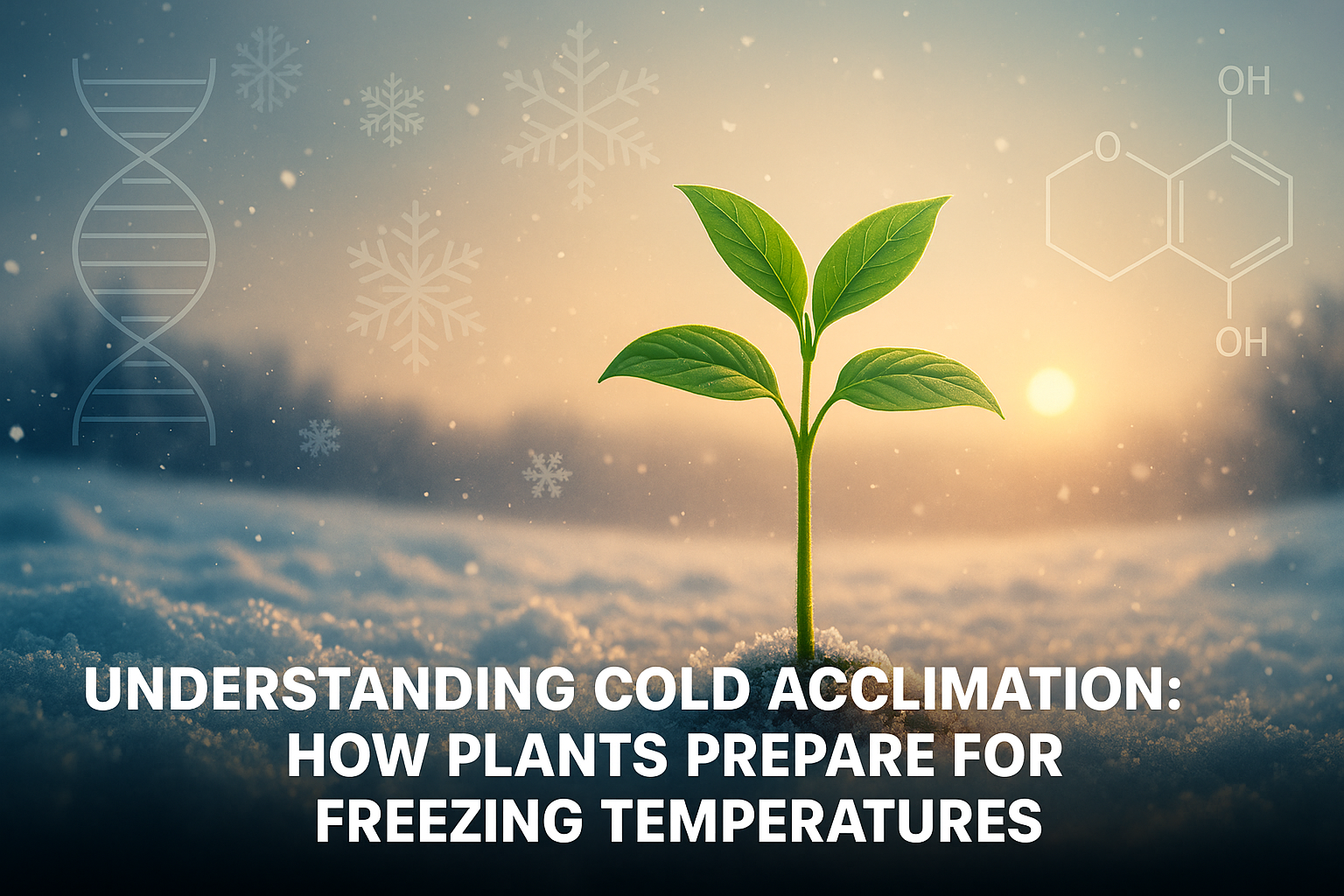
As global climate change intensifies, one of the most pressing challenges for plants is coping with temperature extremes. While heat stress and drought conditions often dominate public discourse, cold stress is an equally formidable threat. It significantly affects plant survival and productivity, especially in temperate and high-altitude regions. Unlike animals, plants are immobile and must adapt physiologically and biochemically to withstand harsh environmental conditions. Among the strategies developed by plants to counter the impact of low temperatures, cold acclimation is a sophisticated process. It stands out as highly dynamic and adaptive.
Cold acclimation refers to the gradual adjustment that plants undergo when exposed to non-freezing, low temperatures. These temperatures are typically between 0°C and 15°C. This enables them to develop tolerance to later freezing conditions. This process involves complex changes at molecular, cellular, and physiological levels. These changes ultimately stabilize membranes. They protect cellular structures and enhance the plant’s overall resilience to cold. The intricacy of cold acclimation has fascinated plant scientists for decades. Understanding its mechanisms can help develop crops better suited for colder climates. This knowledge ensures agricultural sustainability under erratic weather patterns.
Perception of Cold: How Plants Sense Low Temperatures
At the core of cold acclimation lies the perception of low temperature signals. Plants have highly sensitive thermosensors that initiate signal transduction cascades when ambient temperatures drop. The exact molecular identities of these sensors are still under investigation. However, membrane rigidification is widely accepted as a primary trigger. As temperatures fall, the lipid bilayer of the plasma membrane undergoes phase transitions, becoming more rigid and less fluid. This physical change is detected by membrane-associated proteins that likely serve as mechanosensitive or thermosensitive receptors.
The change in membrane fluidity results in an influx of calcium ions into the cytosol. This surge in intracellular calcium acts as a secondary messenger that activates various downstream signaling pathways. Calcium signaling is accompanied by the generation of reactive oxygen species (ROS) in controlled amounts. These ROS are critical signaling molecules under cold stress. Together, these molecules initiate transcriptional reprogramming, ultimately leading to cold-responsive gene expression and biochemical adaptation.
Signal Transduction Pathways: Decoding the Cold Signal
Once the cold is perceived, plants convert this signal into a cascade of molecular events involving multiple pathways. One of the most well-characterized signaling networks in cold acclimation is the CBF (C-repeat binding factor) pathway. CBFs are transcription factors that play a pivotal role in upregulating cold-responsive (COR) genes. In Arabidopsis, exposure to low temperatures induces the expression of ICE1. This also occurs in many other plant species. ICE1 stands for Inducer of CBF Expression 1. ICE1 is a transcriptional regulator. It binds to the promoter regions of CBF genes and activates their expression.
Activated CBF proteins, in turn, bind to specific cis-elements. These are known as CRT/DRE (C-repeat/dehydration-responsive elements) in the promoters of COR genes. This binding promotes their transcription. These COR genes encode proteins that stabilize cellular structures. Examples include dehydrins, antifreeze proteins, late embryogenesis abundant (LEA) proteins, and osmoprotectants. All of these contribute to improved tolerance to freezing temperatures.
Importantly, these pathways are finely regulated by post-translational modifications such as phosphorylation and ubiquitination. For instance, ICE1 can be phosphorylated or ubiquitinated, affecting its stability and activity under cold conditions. Cross-talk with other signaling pathways occurs. These include pathways of abscisic acid (ABA), jasmonic acid (JA), and salicylic acid (SA). This interaction further modulates the cold acclimation response. It adds layers of regulatory control.
Physiological and Biochemical Adjustments During Cold Acclimation
Cold acclimation is not solely a molecular event but also involves broad physiological and metabolic reconfigurations. One of the first noticeable effects is the alteration in membrane lipid composition. Plants increase the proportion of unsaturated fatty acids in their membranes, which helps keep membrane fluidity at low temperatures. This adjustment is vital to preserve the functionality of membrane-bound enzymes and transporters.
Another significant biochemical response is the accumulation of osmoprotectants. These include proline and glycine betaine. Soluble sugars like sucrose, trehalose, and raffinose are also accumulated. These molecules act as cryoprotectants, stabilizing proteins and cellular structures against freeze-induced dehydration and osmotic stress. Additionally, they help maintain cell turgor and prevent cellular collapse.
Plants undergoing cold acclimation also enhance their antioxidant defense systems to manage cold-induced oxidative stress. The upregulation of enzymes such as superoxide dismutase (SOD), catalase (CAT), and peroxidases neutralizes harmful ROS produced during chilling conditions. Alongside enzymatic antioxidants, non-enzymatic molecules such as ascorbate and glutathione also accumulate, forming a robust redox buffering system.
Changes in primary metabolism are also evident during cold acclimation. Photosynthesis slows down. There is a shift towards the accumulation of carbohydrates. These carbohydrates can act as both energy reserves and structural stabilizers. Mitochondrial respiration may also be adjusted to match the lowered metabolic demand, ensuring optimal energy efficiency under low-temperature conditions.
Structural and Developmental Changes in Cold-Acclimated Plants
Beyond the cellular and biochemical responses, cold acclimation induces visible structural modifications in plants. One of the most common changes is the thickening of cell walls. This thickening provides mechanical stability. It also offers protection against ice crystal formation. The deposition of callose and lignin in certain tissues also contributes to increased rigidity and frost resistance.
Leaves of cold-acclimated plants often exhibit reduced surface area and enhanced wax deposition. They also have a denser trichome covering. These features help in minimizing water loss and freezing damage. Root systems may adapt by modifying their architecture. This modification improves nutrient and water uptake when mobility is limited due to cold soil conditions.
Furthermore, plants may alter their developmental timelines in response to prolonged cold exposure. Vernalization is a classic example where exposure to cold temperatures triggers the flowering process in certain species. This phenomenon ensures that flowering and reproduction occur only after the harsh winter has passed, thus enhancing reproductive success.
Biotechnological and Breeding Implications for Cold Tolerance
A deeper understanding of cold acclimation mechanisms opens up valuable avenues for crop improvement through breeding and biotechnology. Traditional breeding methods have long focused on selecting cultivars with natural cold tolerance. However, researchers have identified key genes such as ICE1, CBFs, and CORs. This discovery has enabled the development of transgenic plants with enhanced cold tolerance through genetic engineering.
For example, overexpression of CBF genes in crops such as tomato, rice, and wheat improves survival under chilling conditions. This genetic modification helps these crops survive in colder environments. These crops have demonstrated enhanced resilience. It also enhances survival under freezing conditions. However, this can sometimes lead to growth retardation under normal temperatures. Therefore, a balanced approach that maintains yield and stress tolerance is necessary.
Emerging tools such as CRISPR-Cas9 genome editing are now available. They allow precise modifications of regulatory genes involved in cold acclimation. These modifications occur without introducing foreign DNA. These technologies are merged with omics approaches like transcriptomics, proteomics, and metabolomics. They are revolutionizing our understanding of plant stress responses. We are also improving our ability to manipulate these responses.
Moreover, advances in phenotyping platforms and machine learning models are enabling high-throughput screening of genotypes for cold tolerance traits. These integrative approaches will play a key role in designing climate-resilient crops that can thrive in unpredictable environments.
Conclusion: Towards Climate-Resilient Agriculture
Cold acclimation reflects the remarkable plasticity of plant systems in facing environmental adversity. It is a multi-layered process involving early perception, intricate signal transduction, and large-scale physiological and developmental adaptations. Plants alter membrane fluidity. They activate antioxidant systems. They express cold-responsive genes. They also reshape organ morphology. Through these processes, plants orchestrate a symphony of responses to survive cold stress.
In the context of climate change, erratic temperature drops are becoming more frequent. The ability to cold acclimate becomes a vital trait for crop resilience. Enhancing cold tolerance in plants is crucial for sustaining agricultural productivity. This can be achieved through traditional breeding, molecular engineering, or ecosystem management. It will be essential across diverse agro-climatic zones.
We continue to decode the molecular choreography behind cold acclimation. We move one step closer to a future where food systems are secure. This is crucial even in the face of an uncertain climate. The resilience of plants is a subject of scientific fascination. It is also a foundation for global food security.