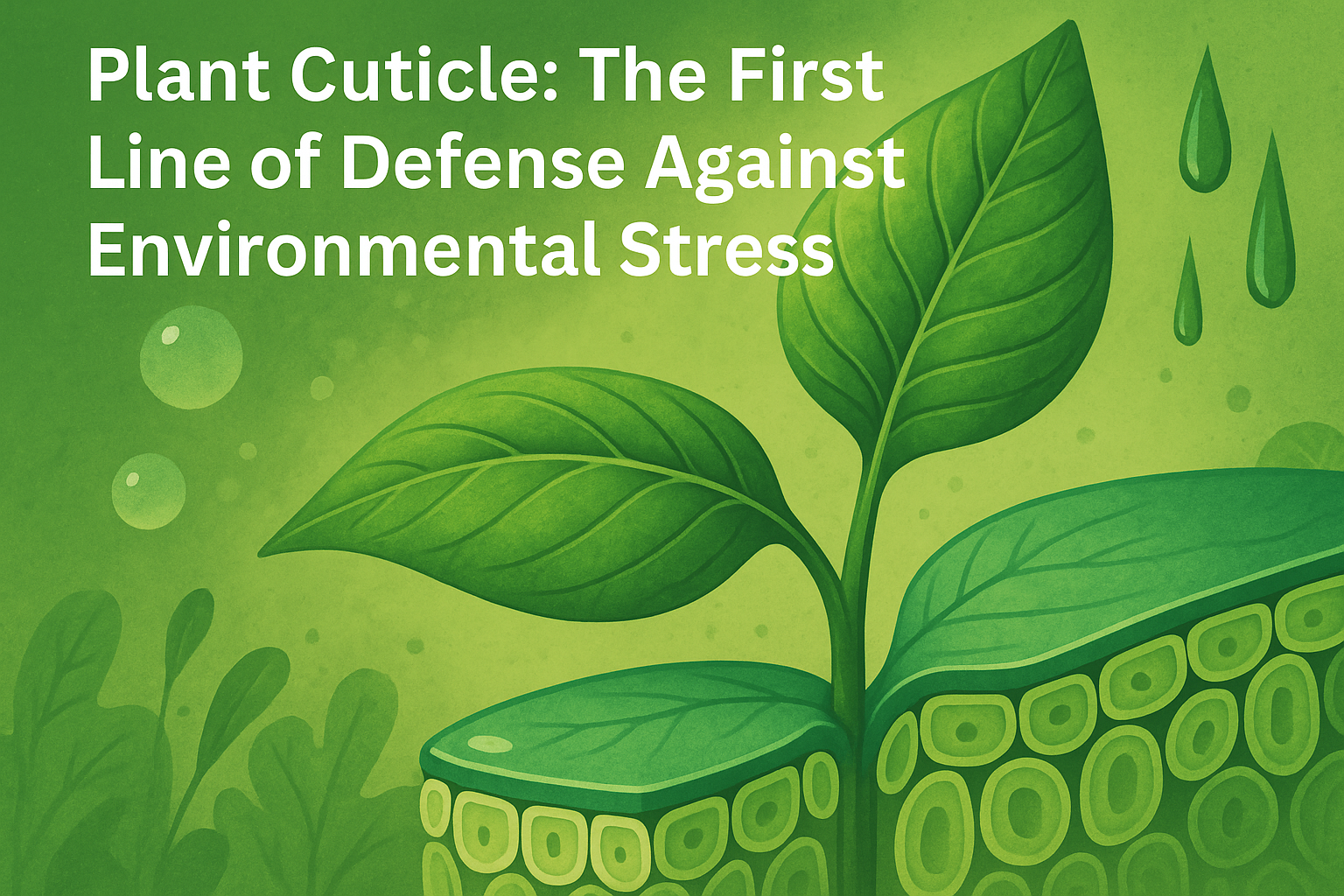
Plants, being immobile organisms, are constantly challenged by environmental extremes such as drought, UV radiation, pathogen attacks, and temperature fluctuations. Unlike animals, they cannot escape these conditions and must instead rely on intricate physiological and structural adaptations to survive. One of the most vital and often underappreciated components of this defense system is the plant cuticle. This waxy, hydrophobic layer covers the aerial surfaces of most land plants. It provides a physical shield. It also acts as a complex biochemical interface that senses, responds, and adapts to external stressors. Though microscopic in thickness, the cuticle plays a macro role in plant resilience. It regulates water loss, mitigates oxidative damage, deters microbial invasion, and facilitates controlled interaction with the environment. Climate change is becoming more urgent. There is also a growing need for stress-resilient crops. Understanding the function and regulation of the cuticle has become immensely relevant.
Structure, Composition, and Formation of the Cuticle
The plant cuticle is composed primarily of cutin. Cutin is a polyester of hydroxy and epoxy fatty acids that forms the structural framework. It also includes cuticular waxes. These are a mixture of very-long-chain fatty acid derivatives including alkanes, aldehydes, alcohols, ketones, and esters. This dual composition creates a hydrophobic barrier capable of resisting both water loss and pathogen ingress. During the development of leaves, stems, flowers, and fruits, epidermal cells synthesize cutin monomers in the endoplasmic reticulum. These monomers are then transported to the cell surface. There, they are polymerized and integrated into the cell wall. The deposition of intracuticular and epicuticular waxes follows. This creates a crystalline or amorphous outer layer. This outer layer determines the cuticle’s permeability and mechanical strength. Enzymes such as cytochrome P450s (e.g., CYP86A, CYP77A), glycerol-3-phosphate acyltransferases (GPATs), long-chain acyl-CoA synthetases (LACSs), and ATP-binding cassette (ABC) transporters are all critical in these biosynthetic and transport processes. Transcription factors like WIN1/SHINE, MYB96, and WAX INDUCER genes orchestrate these pathways. They ensure that cuticle formation is developmentally timed. Cuticle formation is also environmentally responsive.
Role in Water Retention, Drought Resistance, and UV Defense
One of the most fundamental roles of the cuticle is the regulation of water loss through non-stomatal pathways. In dry conditions, the cuticle acts as a barrier. During times when stomata are closed, it slows down water vapor diffusion. This process helps plants conserve internal moisture. Its efficiency in this role is strongly dependent on the quantity and composition of waxes. Plants exposed to drought often show increased cuticle thickness. They also exhibit more wax load. This adaptation is dynamic. It is mediated by the stress-induced expression of genes like SHN1, CER1, and WAX2. This increase not only enhances drought tolerance but also helps maintain cellular turgor pressure under low water availability. Simultaneously, the cuticle plays a significant role in shielding plant tissues from harmful ultraviolet (UV-B) radiation. The cuticular matrix contains UV-absorbing compounds like flavonoids and phenolics. These compounds provide a chemical screen. This screen reduces photodamage to DNA, proteins, and membranes. In high-altitude or desert ecosystems, UV intensity is severe. Plants in these areas often possess more developed cuticles. Their cuticles have denser wax layers and higher flavonoid content. This demonstrates a clear evolutionary adaptation for photo-protection.
Defense Against Pathogens and Insect Herbivores
Beyond abiotic stress, the cuticle serves as the first line of defense against biotic challenges. These challenges include fungi, bacteria, and insect pests. Its structural integrity creates a formidable physical barrier that impedes microbial adhesion, penetration, and colonization. The chemical makeup of the cuticle is also vital to this defense. Certain lipid profiles and wax patterns are known to deter specific pathogens. However, some pathogens have evolved strategies to breach this barrier by secreting cutin-degrading enzymes like cutinases and esterases. Plants counter this by either reinforcing their cuticle through rapid deposition of additional wax. They also activate innate immune responses. These include reactive oxygen species (ROS) generation, salicylic acid signaling, and expression of pathogenesis-related (PR) genes. The cuticle also modulates herbivore interactions—its glossiness, toughness, and chemical cues can deter feeding or oviposition in insects. Interestingly, when the cuticle’s integrity is altered through mutation or environmental damage, it often results in increased susceptibility to pathogens and herbivores. This outcome reaffirms its role as a sentinel structure in plant immunity.
Ecological Significance and Evolutionary Adaptations
The development of a protective cuticle was a crucial evolutionary innovation that allowed early land plants to colonize terrestrial habitats. This waxy layer enabled plants to reduce desiccation. It also helped them withstand fluctuating atmospheric conditions. This adaptation facilitated a transition from aquatic to land environments. In modern plant species, diversity in cuticle composition and structure reflects adaptations to varied ecological niches. Desert plants, for instance, display extremely thick cuticles and intricate wax crystals. These features help them cope with intense sunlight and water scarcity. Rainforest species often have thinner, more permeable cuticles suited to humid environments. The cuticle also influences ecological interactions—its texture and chemistry can affect pollinator behavior, seed dispersal, and symbiotic relationships. Moreover, traits like leaf surface wettability are determined by cuticular microstructure. These traits have implications for pathogen dispersal via raindrops. They also affect the foliar application of agrochemicals. Thus, the cuticle is not just a passive barrier but an active participant in shaping ecological interactions and evolutionary trajectories.
Biotechnological Applications and Future Prospects
Advances in molecular biology, genomics, and genome editing have opened new frontiers in studying the plant cuticle. They have also advanced its manipulation. Researchers are now able to profile the expression of entire gene families involved in cuticle biosynthesis. They can also edit key regulatory elements using CRISPR-Cas9 technology. SHN1 and related transcription factors are overexpressed in crops such as tomato, rice, and barley. As a result, there is increased wax deposition and enhanced water-use efficiency. These crops also exhibit better tolerance to drought and salinity. Additionally, researchers are exploring natural variants in cuticle-associated genes like CER and LTP. These genes include lipid transfer proteins. This exploration is done in breeding programs to improve abiotic stress resilience without compromising yield. The study of cuticle traits also extends beyond agriculture. Scientists are developing biomimetic materials inspired by plant cuticles for water-repellent surfaces. They are also creating biodegradable packaging. Moreover, the understanding of cuticle permeability helps in designing more efficient foliar sprays. This understanding aids molecular transport and provides nutrition and protection. As we move towards climate-smart agriculture, the plant cuticle offers a unique model of resilience. It blends structural simplicity with functional complexity.
Conclusion: A Dynamic Barrier in an Unforgiving World
In conclusion, the plant cuticle stands as a remarkable example of how life can thrive under adversity. This ultra-thin layer of wax and polyester shields plants from water loss, UV radiation, and microbial attack. It also dynamically adjusts to environmental signals. This adjustment evolves and responds in real-time. It is an essential mediator of plant-environment interactions, with roles that extend from basic survival to complex ecological relationships. As the agricultural sector faces challenges posed by global warming, it also encounters erratic rainfall and emerging pathogens. The cuticle becomes a promising target for crop improvement strategies. By decoding its biosynthetic pathways, scientists are finding new ways to engineer plants. These plants are not only more resilient but also more efficient and sustainable. The future of climate-resilient agriculture may rest on the surface of leaves. This thin, glistening layer carries the weight of survival.