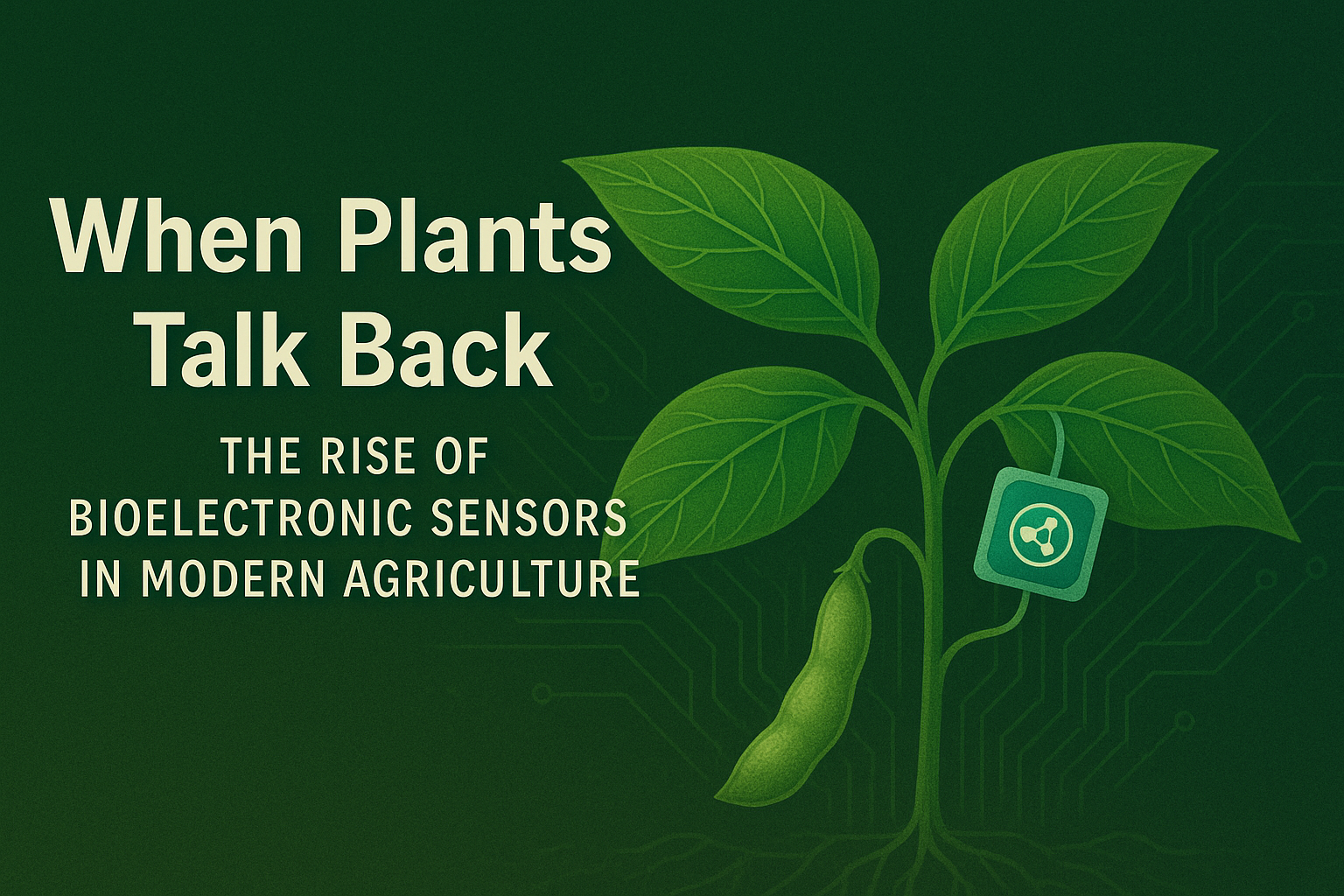
For centuries, farmers have relied on intuition to interpret the silent signals of their crops. A drooping leaf meant thirst, a yellow hue warned of nutrient deficiency, and curling edges revealed heat or drought stress. Observation was the oldest form of agricultural intelligence, but it had limits. Plants live in a quiet world; they don’t speak, cry, or show immediate signs of suffering. Their communication is subtle, carried through the flow of water, hormones, and tiny electrical pulses invisible to the human eye. Today, science is learning to listen to those signals through bioelectronic sensors soft, flexible devices that translate the electrical whispers of leaves and roots into data. Every plant is alive with electricity, driven by the movement of ions across its membranes. When a plant faces drought or pest attack, these voltage patterns shift in measurable ways. By merging plant physiology with electronics, researchers are giving plants a digital voice an ability to “talk back.” These sensors, often made from materials like graphene or conductive polymers, gently adhere to plant tissues, reading their voltage fluctuations without causing harm. The data collected can reveal stress hours before any visible symptom appears, allowing farmers and scientists to intervene precisely when needed. In essence, plants are becoming storytellers of their own wellbeing, sharing real-time information about their health and environment.
The Rise of Plant Bioelectronics
This quiet revolution marks the birth of a new discipline called plant bioelectronics, where biology meets engineering to create living networks of communication. Traditional agriculture has long depended on tools that monitor soil moisture, temperature, and weather patterns, yet these tools only measure external conditions. Bioelectronic sensors take us inside the plant’s world, recording physiological signals rather than environmental ones. In a smart field of the future, each crop leaf might carry a paper-thin, transparent patch that continuously sends its readings to a cloud-based platform. Artificial intelligence interprets these patterns, recognizing when a plant is dehydrated, nutrient-starved, or under attack. Automated irrigation systems could then supply water to plants that “ask” for it, while nutrient management systems adjust fertilizer input in real time. This seamless exchange of biological and digital information is giving rise to what researchers call the Internet of Living Things a global network where living organisms become part of the data ecosystem. Beneath the surface, similar technologies are being developed for roots, which often sense stress first. New biodegradable hydrogels and microneedle sensors now monitor electrical activity underground, mapping how roots respond to salinity, drought, and microbes without disturbing the soil. Together, these above- and below-ground innovations are transforming how we perceive plants not as static organisms, but as active communicators within a responsive ecosystem.
Artificial Intelligence: Translating Nature’s Signals
Understanding the voice of plants requires more than collecting data, it demands interpretation. Plant electrical signals are complex, often varying with light intensity, humidity, or even circadian rhythm. This is where artificial intelligence becomes the translator of biological language. Machine learning algorithms analyze thousands of signal patterns, distinguishing natural fluctuations from true stress responses. Over time, they learn to identify specific “electrical fingerprints” linked to drought, nutrient shortage, or pathogen attack. This allows predictive models to anticipate stress before it becomes visible, turning plant care from a reactive task into a proactive science. In the near future, we may see self-reporting crops plants capable of alerting farmers directly through digital dashboards or mobile apps. Some prototypes already use the plant’s own energy, harvesting power from photosynthesis or transpiration to run the sensors themselves. Imagine a greenhouse where plants send gentle messages to growers: “I need more water,” “My leaves are overheating,” or “Nutrient levels are falling.” Such feedback loops could redefine precision agriculture, making it both self-sustaining and deeply attuned to the biological rhythms of crops. Beyond farming, bioelectronic sensors have potential in environmental monitoring and urban ecosystems. Living plants fitted with these devices can act as natural biosentinels, detecting pollution or climate shifts, while space research agencies explore similar systems for cultivating crops in extraterrestrial environments. Wherever life grows, these sensors promise a new way of listening to it.
Listening to the Future of Sustainable Farming
Of course, challenges remain. Plants are dynamic organisms that grow, move, and adapt, making consistent sensor contact difficult. Environmental factors such as rain, wind, or leaf wax can interfere with measurements. Engineers are tackling these issues with flexible nanomaterials, biodegradable circuits, and adaptive signal-processing systems. Cost, durability, and data accuracy are improving rapidly, bringing the vision of field-ready plant bioelectronics closer to reality. Ethical questions also accompany this innovation how much should we integrate living systems with machines, and who will own the data produced by nature itself? Still, the potential benefits are profound. By enabling plants to communicate their needs directly, we can use resources more efficiently reducing over-irrigation, limiting fertilizer waste, and preventing stress-related crop losses before they occur. This approach not only boosts productivity but aligns perfectly with the principles of sustainable agriculture. It encourages us to work with plants instead of merely managing them. The fusion of bioelectronics and artificial intelligence is teaching humanity something humbling yet powerful: the importance of listening. As we decode the electrical rhythms of roots and leaves, we are rediscovering that plants are not passive background players but active participants in Earth’s living network. The farms of the future will not be silent they will hum softly with the electrical conversations of millions of plants, each sending a message, each telling us how to care for the world that feeds us.