Plants face an unpredictable and often harsh environment. Heatwaves arrive suddenly, drought shuts down cellular hydration, and salinity disrupts ionic balance. For many years, scientists understood stress tolerance mainly through familiar mechanisms such as heat shock proteins, osmolyte accumulation, antioxidant pathways, and hormonal signaling. But recent breakthroughs have revealed a deeper and remarkably elegant system hidden inside plant cells: protein phase separation. This process allows cells to create temporary, membraneless compartments often called biomolecular condensates that help reorganize cellular activities when conditions become extreme. Instead of relying solely on gene expression or protein synthesis, which take time and energy, plants use phase separation as a fast, flexible strategy to protect critical molecules, store damaged proteins, and coordinate metabolic shifts.
Phase separation, once considered a curiosity of soft-matter physics, has now emerged as a central theme in cell biology. In plants, its importance is becoming increasingly clear as researchers discover condensates forming during heat stress, drought responses, salinity exposure, oxidative bursts, and low-oxygen conditions. These dynamic droplets behave like microscopic biological droplets, assembling and dissolving depending on the plant’s needs. As climate pressures intensify, understanding this layer of stress physiology is essential for building resilient crops.
What Is Protein Phase Separation?
Most people learn that cells are organized around membrane-bound organelles like the nucleus, chloroplasts, mitochondria, and vacuoles. However, many critical processes occur in compartments that have no membranes at all, yet remain organized, functional, and selective. These structures form through liquid–liquid phase separation, a process in which certain proteins and RNA molecules spontaneously gather into dense droplets within the cell’s watery environment. These droplets are not solid; they behave like tiny liquid entities that fuse, deform, and exchange components with their surroundings.
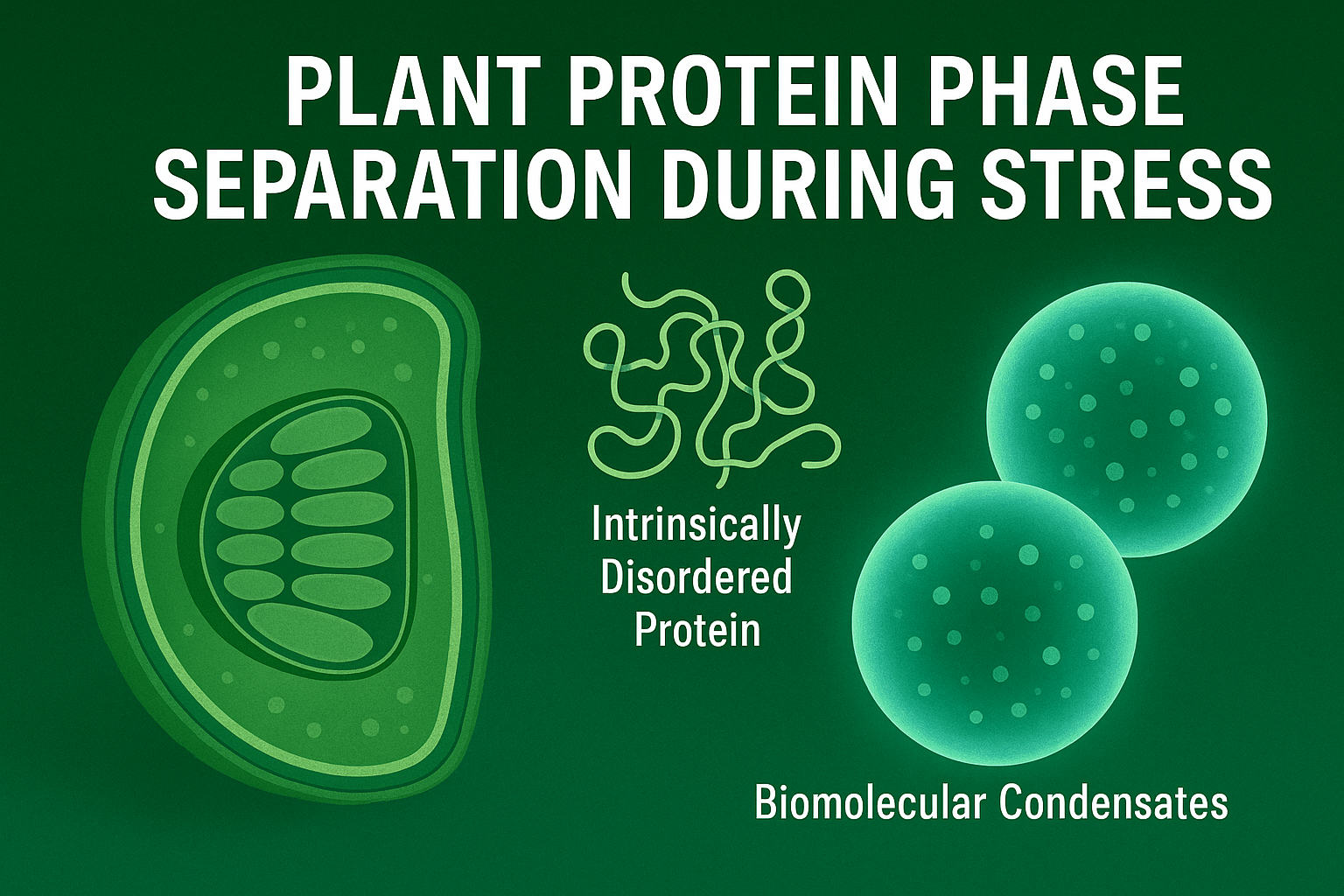
Proteins that form these condensates often contain intrinsically disordered regions, flexible stretches that allow many weak interactions. When environmental conditions shift, these interactions change, causing proteins to cluster together into droplets. Inside plant cells, these condensates appear in the nucleus, cytoplasm, chloroplasts, and even near membranes. Their formation is rapid, reversible, and sensitive to conditions such as ionic strength, temperature, hydration, and oxidative state.
These droplets serve several purposes. They can temporarily isolate molecules that would otherwise react in harmful ways during stress. They can also concentrate enzymes or RNA molecules to accelerate specific reactions. Some condensates act as protective shelters for sensitive proteins when heat threatens to denature them. Others act as regulatory hubs, amplifying stress signaling pathways or helping transcription factors find their target genes. This ability to reorganize cellular processes without building new structures or breaking existing ones gives plant cells a remarkable adaptive advantage.
Phase Separation During Stress
Stress alters the physical environment of the cell, and phase separation acts as a rapid response system. During heat stress, temperatures can rise faster than cells can activate transcriptional responses. Proteins begin to unfold, exposing sticky regions that could lead to aggregation. Phase-separated droplets form almost instantly, gathering at-risk proteins into protective compartments where chaperones can later repair them. These droplets help prevent irreversible damage, acting as an early front-line defense before heat shock proteins arrive in sufficient numbers.
Drought has a different effect but leads to the same phenomenon. As water availability decreases, the cytoplasm becomes more crowded, and ion balance shifts. These changes favor the formation of condensates that reorganize metabolism toward survival mode. Researchers have observed transcription factors forming droplets under dehydration, enabling rapid activation of drought-responsive genes. Phase separation helps guard cell signaling proteins reorganize during stomatal closure, and it influences how ABA-responsive pathways behave.
Salinity stress disrupts ionic balance and alters protein charge states, creating conditions that promote droplet formation. In high-salt environments, some enzymes and regulatory proteins phase-separate to avoid misfolding, while others cluster to stabilize metabolic pathways. The dynamic nature of these condensates allows plants to tune their physiology minute by minute, adjusting metabolic fluxes, redox balance, and ion transport.
Oxidative stress also triggers phase separation. When ROS levels rise, certain redox-sensitive proteins undergo conformational shifts that promote droplet assembly. These condensates often concentrate antioxidant enzymes or signaling molecules, creating hotspots for detoxification or rapid signaling. Far from being a passive consequence of stress, phase separation plays an active role in orchestrating the response.
Role of Biomolecular Condensates
One of the most important roles of phase separation lies in gene regulation. In plant nuclei, transcription factors frequently form condensates that localize around specific genomic regions. These droplets act as recruitment hubs, concentrating transcriptional machinery and enhancing the expression of stress-responsive genes. This explains how plants can mount extraordinarily fast transcriptional responses without synthesizing entirely new proteins. Phase separation creates microenvironments that bring together all necessary components to activate protective pathways.
Developmental processes also rely on condensates. During flowering, root patterning, and embryogenesis, key regulators phase-separate to control spatial gene-expression patterns. In meristems, phase-separated compartments help maintain the balance between stem cell maintenance and differentiation. This highlights that condensates are not only stress-related but fundamental to normal physiological regulation.
In immunity, biomolecular condensates often determine the speed and magnitude of defense activation. When a pathogen is detected, immune receptors and signaling proteins cluster into liquid droplets that amplify defense signals. These condensates help coordinate ROS bursts, hormone signaling, and transcriptional activation. Interestingly, many pathogens attempt to disrupt or hijack condensates, revealing how essential they are to plant defense.
In chloroplasts, condensate formation helps regulate photosynthetic enzymes under fluctuating light or stress. Certain phases of photoprotection depend on enzymes clustering into droplets that enhance or suppress specific reaction steps. Even Rubisco activase shows behaviors reminiscent of phase separation, providing new perspectives on photosynthetic regulation under heat.
Why Phase Separation Matters for Climate-Resilient Crop Design
Understanding phase separation is not just academically interesting it has profound implications for agriculture. Many stress-sensitive proteins fail under heat, drought, or salinity because they cannot reorganize quickly enough. Crops that form protective condensates more effectively may withstand extreme conditions far better. This opens the door to a new generation of breeding goals: designing alleles with optimized intrinsically disordered regions, enhancing condensate formation, or tuning the stability of phase-separated droplets.
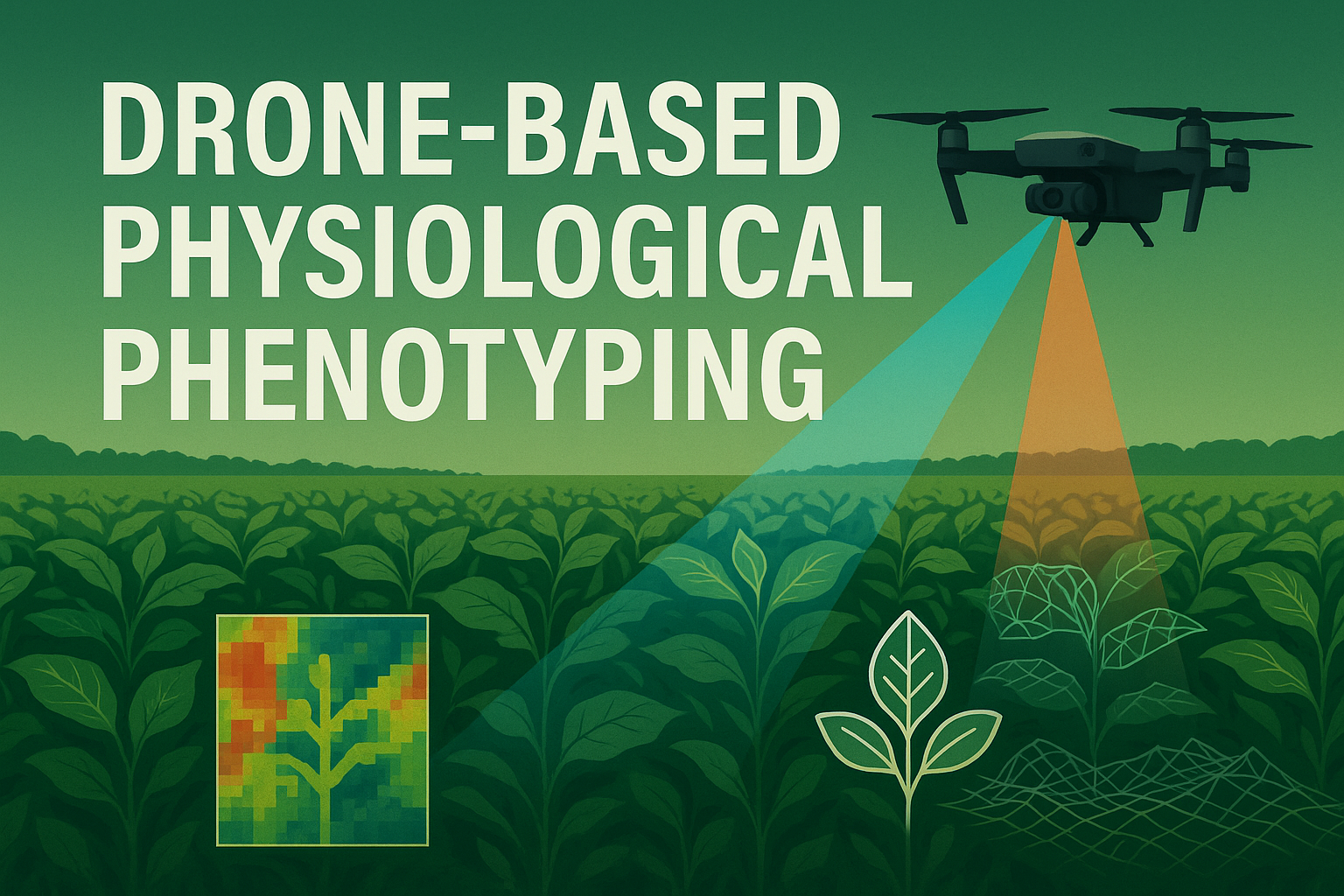
CRISPR and prime editing technologies may soon engineer crops with modified phase-separation behavior, reinforcing stress resilience at the molecular level. Biomolecular condensates could also serve as early stress biomarkers, enabling rapid phenotyping using imaging or nanobiosensors. As researchers uncover more condensate-forming proteins in key pathways like ABA signaling, ROS detoxification, stomatal regulation, and immune activation, these targets may form the basis of future climate-ready crop improvement strategies.
Phase separation represents a fundamental shift in how we view plant physiology. Instead of rigid structures with fixed roles, cells are dynamic, fluid environments where proteins reorganize themselves according to need. This adaptability may be one of the reasons plants survive extreme environments and understanding it will help us unlock new pathways for resilience.