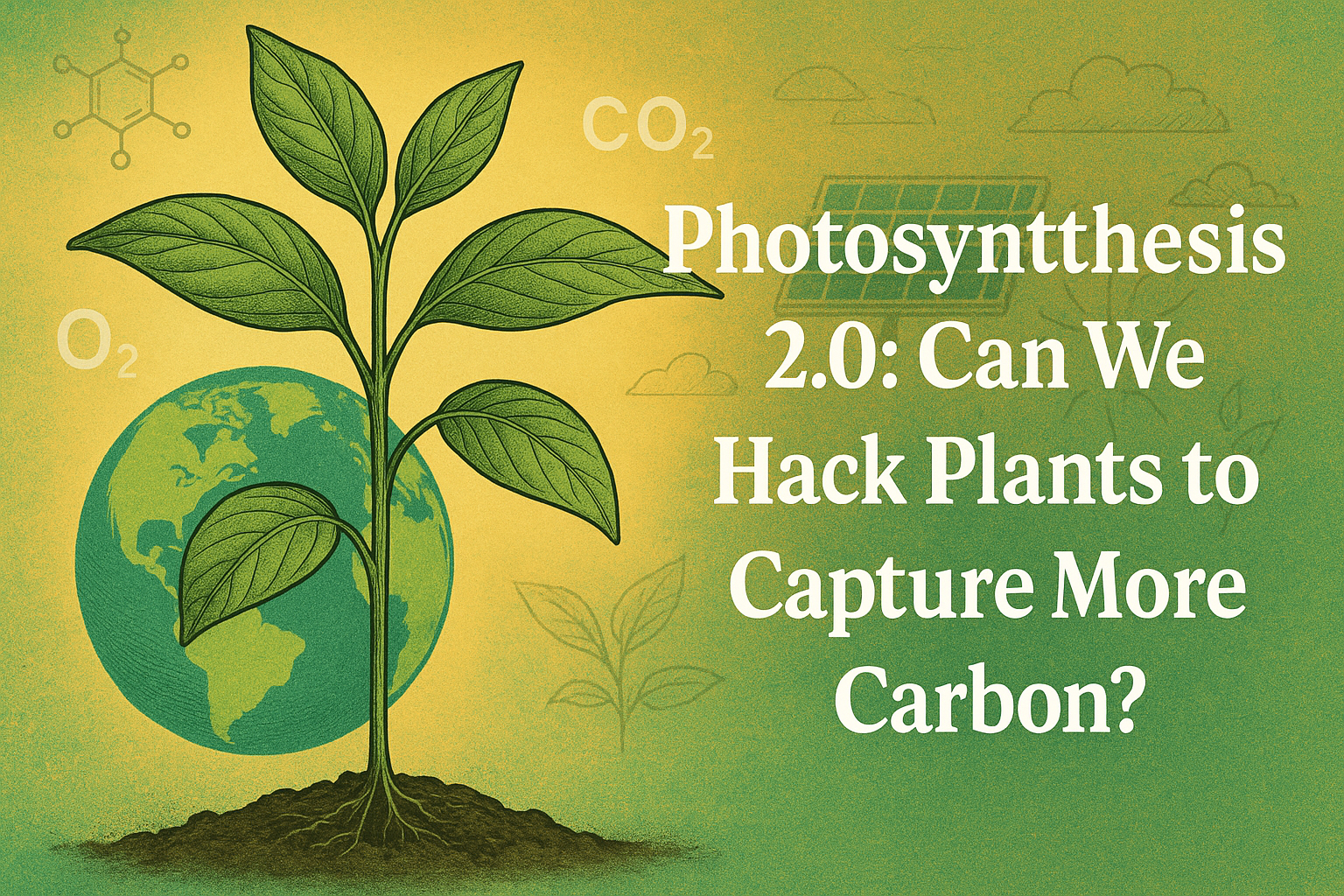
Every breath we take, every grain we eat, every forest we admire begins with a quiet miracle — photosynthesis. This single process built our atmosphere, fuels the food web, and holds the key to reversing climate change. Yet, for all its brilliance, photosynthesis isn’t perfect. It evolved in a world millions of years ago when oxygen levels were lower and carbon dioxide was abundant. Today’s plants still rely on that ancient design, one that leaks energy and loses precious carbon through inefficiency.
But what if we could upgrade it? What if photosynthesis could be hacked, tweaked, and redesigned for the 21st century? Not through science fiction, but through real molecular biology and engineering. That’s the dream behind Photosynthesis 2.0 — a global scientific effort to imagine how plants capture and convert light into life.
The Problem with Nature’s Perfect System
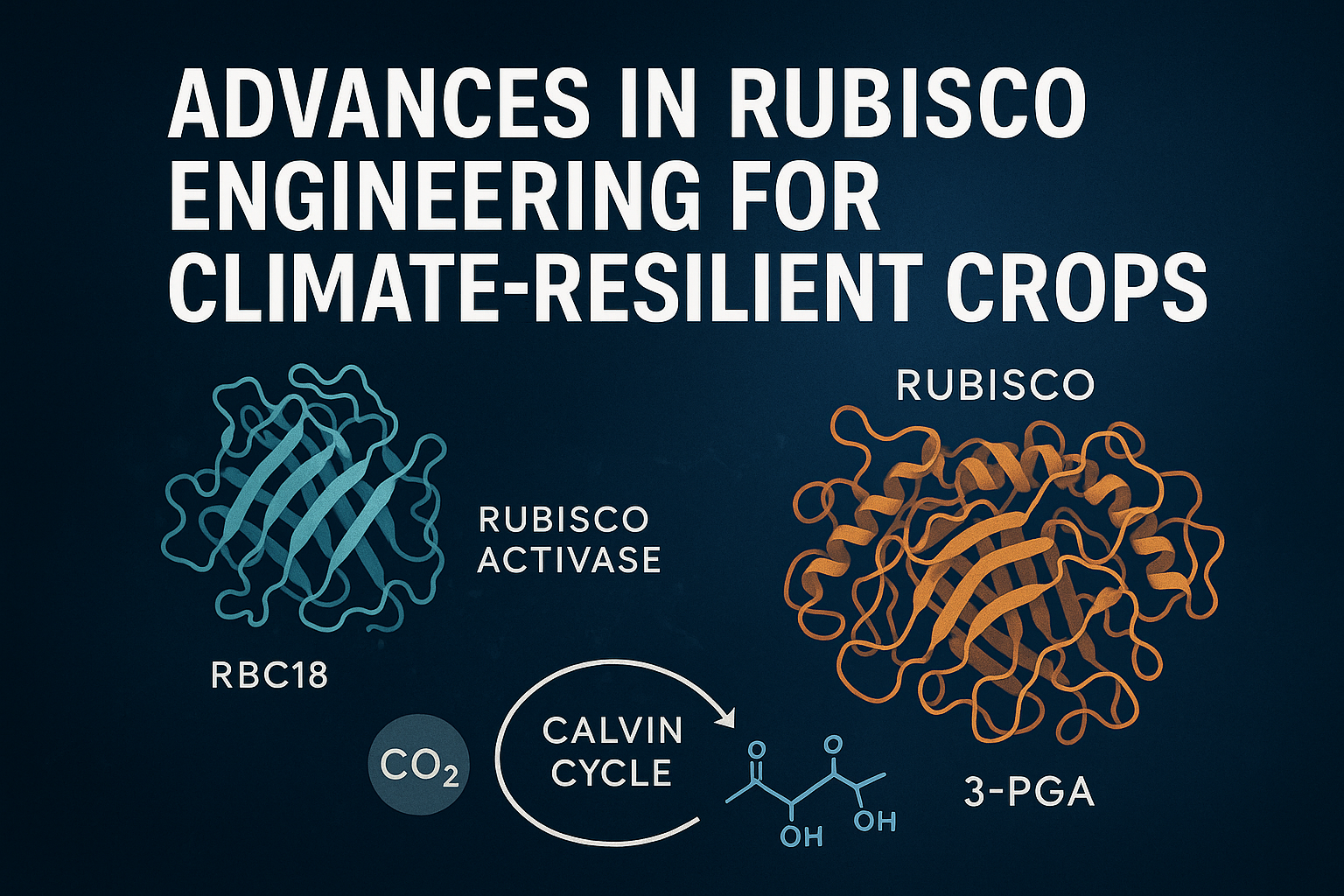
At its core, photosynthesis converts carbon dioxide and water into sugars using sunlight. It looks simple in diagrams. However, in reality, it’s a complex chain of biochemical reactions. These reactions depend on one critical enzyme: Rubisco. This enzyme — the most abundant protein on Earth — captures CO₂ and fixes it into organic molecules. However, Rubisco is also astonishingly inefficient. It often grabs oxygen instead of carbon dioxide. This triggers a costly process called photorespiration. This process wastes energy and releases carbon instead of capturing it.
This flaw wasn’t an issue when Earth’s air was rich in CO₂ millions of years ago. But as oxygen increased, Rubisco never fully adapted. Modern crops lose up to 40% of their potential productivity because of this ancient limitation. Plants have evolved clever workarounds. These include the C₄ pathway in maize or CAM metabolism in succulents. However, the enzyme itself remains slow and error-prone.
In a world facing both food insecurity and rising carbon emissions, this inefficiency has turned into an opportunity. Scientists are now asking: can we help plants do what evolution hasn’t — make photosynthesis faster, smarter, and more efficient?
Redesigning the Green Engine
The first frontier of Photosynthesis 2.0 is genetic redesign. Scientists are experimenting with ways to make Rubisco more efficient by borrowing versions from algae and bacteria. Some of these microbial Rubiscos work faster or bind CO₂ more tightly than the plant versions. Researchers at the University of Illinois have succeeded in introducing new Rubisco types. The Max Planck Institute is collaborating with them to achieve this in crop plants. Their aim is to make carbon fixation quicker and more reliable.
Others are taking a different route: rather than fixing Rubisco, they’re fixing its mistakes. When Rubisco binds oxygen, it creates a toxic compound called glycolate. Plants must recycle glycolate through a slow, energy-intensive photorespiratory pathway. In a major breakthrough, researchers engineered a synthetic photorespiration bypass. It acts as a kind of molecular shortcut. This allows plants to recycle glycolate much more efficiently. In field trials, these modified plants grew up to 40% faster, simply because less energy was wasted. That same principle is now being tested in major crops like rice, wheat, and soybean. This could potentially mark the first real step toward upgraded photosynthesis.
At a broader level, scientists are also studying plants that have already “hacked” the system naturally. C₄ plants like maize and sorghum evolved specialized leaf anatomy. They have internal CO₂ pumps that keep oxygen away from Rubisco. This increases efficiency. The ambitious C₄ Rice Project is a collaborative effort. The International Rice Research Institute (IRRI) leads it with global partners. The goal is to transfer this pathway into rice. This is a massive challenge involving dozens of genes and structural changes. If successful, rice could yield more grain while using less water and fertilizer, transforming agriculture in tropical regions.
Each of these strategies — from enzyme tweaks to metabolic shortcuts — represents a piece of the Photosynthesis 2.0 puzzle: turning plants into faster, smarter solar machines.
Beyond the Leaf: Artificial and Synthetic Photosynthesis
While plant biologists focus on improving nature’s design, engineers are building artificial versions inspired by it. Artificial photosynthesis aims to mimic what plants do. It turns sunlight, water, and carbon dioxide into energy-rich compounds. However, it uses non-living materials. These systems use metal catalysts. They also use light-sensitive semiconductors instead of chloroplasts. This generates clean fuels like hydrogen or methanol directly from air and sunlight. Projects at Caltech, Cambridge, and the Joint Center for Artificial Photosynthesis (JCAP) have already demonstrated small-scale devices. They achieve this process efficiently.
This new technology could one day work hand-in-hand with living plants. While natural photosynthesis captures carbon biologically, artificial systems could recycle atmospheric CO₂ into usable fuels, closing the carbon loop. Together, they might help stabilize both our food systems and our energy future.
Meanwhile, in the realm of synthetic biology, researchers are designing entirely new carbon-fixing pathways. These pathways are created from scratch. They are faster and more adaptable than any found in nature. A landmark experiment in 2016 introduced a synthetic cycle. It was named the CETCH pathway. This cycle was built from enzymes sourced from nine different organisms. This artificial route fixed carbon more efficiently than the Calvin cycle — the main pathway in plants. This efficiency shows that it’s possible to build new forms of photosynthesis from the ground up.
If such synthetic cycles can one day be integrated into real plants or microalgae, they could double carbon capture rates. This could pave the way for “super-photosynthetic” crops that grow quickly and thrive even in harsh environments. The possibilities extend beyond food. Microalgae enhanced with synthetic carbon pathways could absorb industrial CO₂. They could generate biofuels or even produce materials for medicine and manufacturing.
Can Photosynthesis 2.0 Save the Planet?
Enhancing photosynthesis isn’t just about improving crop yields — it’s about reimagining our relationship with the carbon cycle. Plants are the planet’s most powerful natural carbon sinks, absorbing roughly a quarter of the CO₂ we emit each year. If we could help them capture more. We could enhance their ability to store carbon longer in their roots and soil. This would turn farms and forests into tools for climate repair.
Scientists are already exploring carbon-farming approaches where engineered plants channel more carbon into deep root systems, effectively locking it underground. Others envision trees that photosynthesize more efficiently under high CO₂ levels, offsetting emissions from human activity. These innovations don’t replace the need to cut pollution. However, they could buy humanity crucial time in the race to stabilize the climate.
Still, rewriting photosynthesis isn’t a decision to take lightly. Every genetic change in plants has ripple effects on ecosystems. A hyper-efficient crop might outcompete native species or alter soil microbiomes. That’s why leading researchers emphasize careful, transparent development — blending innovation with ecological wisdom. Photosynthesis 2.0 must serve both humanity and nature, enhancing life rather than unbalancing it.
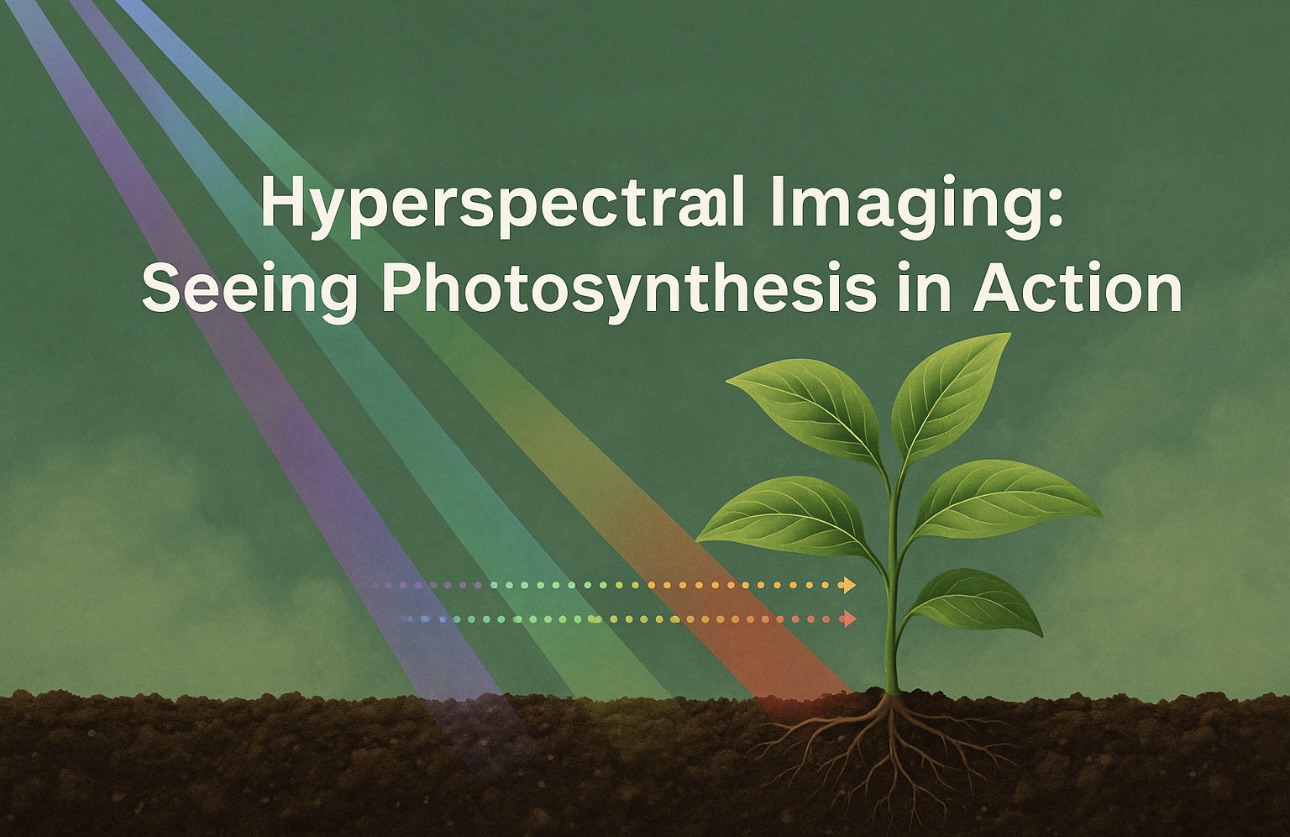
Looking ahead, the next generation of crops may combine genetic engineering, AI-guided growth optimization, and precision agriculture. Using drones and hyperspectral sensors, scientists can already track how efficiently plants use light and carbon in real time. Imagine farms that self-adjust irrigation or nutrient supply based on how photosynthetic activity fluctuates during the day. In such a world, photosynthesis becomes not just a natural process but a monitored, optimized, and intelligently managed system.
A Greener Vision for the Future
Photosynthesis has quietly sustained life for billions of years, turning sunlight into the foundation of the biosphere. Now, as humanity faces a rapidly changing climate, this ancient process could once again become our greatest ally. Photosynthesis 2.0 represents more than a scientific upgrade — it’s a partnership between nature and technology, between evolution and intention.
We’re not trying to replace what nature built; we’re trying to strengthen it. By improving photosynthesis, we’re empowering plants with the tools to thrive in an altered world. We enable them to grow food where it’s scarce and to pull carbon from a sky we’ve filled. It’s a story of hope — of light meeting life in new ways.
If we succeed, future generations will see green fields not just as food or beauty. They will perceive them as living machines of restoration. These fields will be silent, steady, and endlessly efficient. The next era of plant science may start where the first leaf began billions of years ago. This time, human hands will help the sun do its work.