Most of us think of photosynthesis as a process controlled mainly by sunlight, stomata, chlorophyll, and carbon dioxide. These are the visible parts of the story, the elements we read about in textbooks and observe in experiments. But there is another powerful, hidden force inside the leaf that determines how efficiently plants can convert CO₂ into sugars. This unseen step is called mesophyll conductance, and it is becoming one of the most important topics in modern plant physiology.
Mesophyll conductance refers to how easily carbon dioxide moves from the inside of a leaf to the chloroplasts where photosynthesis actually happens. For many years, scientists assumed this step was simple and fast, almost negligible. But research has now revealed that mesophyll conductance can be a major bottleneck, especially under stress or in certain species. In other words, a leaf may have plenty of CO₂ in the air and even in the spaces inside the leaf, but the CO₂ may still struggle to reach the chloroplasts.
Understanding mesophyll conductance is crucial for agriculture, plant breeding, and climate resilience. If we care about improving photosynthesis, increasing crop yields, or helping plants withstand stress, we must look inside the leaf and understand the barriers that CO₂ encounters along its path. This article explores what mesophyll conductance is, why it matters, what controls it, and how scientists are trying to improve it.
Why Mesophyll Conductance Matters More Than We Realize
The journey of CO₂ into a leaf begins at the stomata, the tiny pores on the leaf surface. When stomata open, CO₂ enters the leaf’s internal air spaces and begins moving toward the mesophyll cells, eventually reaching the chloroplasts. For decades, plant scientists believed that stomatal opening was the primary control point in CO₂ supply. If photosynthesis was limited, the assumption was that the stomata had closed or light was insufficient.
But over time, it became clear that even when stomata are wide open and light is abundant, photosynthesis can still be slow. This led researchers to investigate what happens inside the leaf after CO₂ enters. What they discovered is that the journey from the intercellular air spaces to the chloroplasts is surprisingly complex. CO₂ must dissolve into water, cross multiple membranes, move through cell walls, and enter the stroma inside chloroplasts. Each step introduces resistance.
This hidden resistance is called mesophyll conductance, and it turns out to be just as important as stomatal conductance in regulating photosynthesis. In some species, mesophyll conductance can limit photosynthetic rates as much as fifty percent. That means even if everything else is optimised light, stomatal opening, enzyme activity but photosynthesis may still be held back simply because CO₂ cannot diffuse efficiently inside the leaf.
This discovery has major implications. It suggests that improving photosynthesis is not only about making stomata more responsive or boosting Rubisco activity but also about changing the internal structure of leaves. Mesophyll conductance may be the hidden key to unlocking higher productivity in crops.
The Journey of CO₂ Inside the Leaf
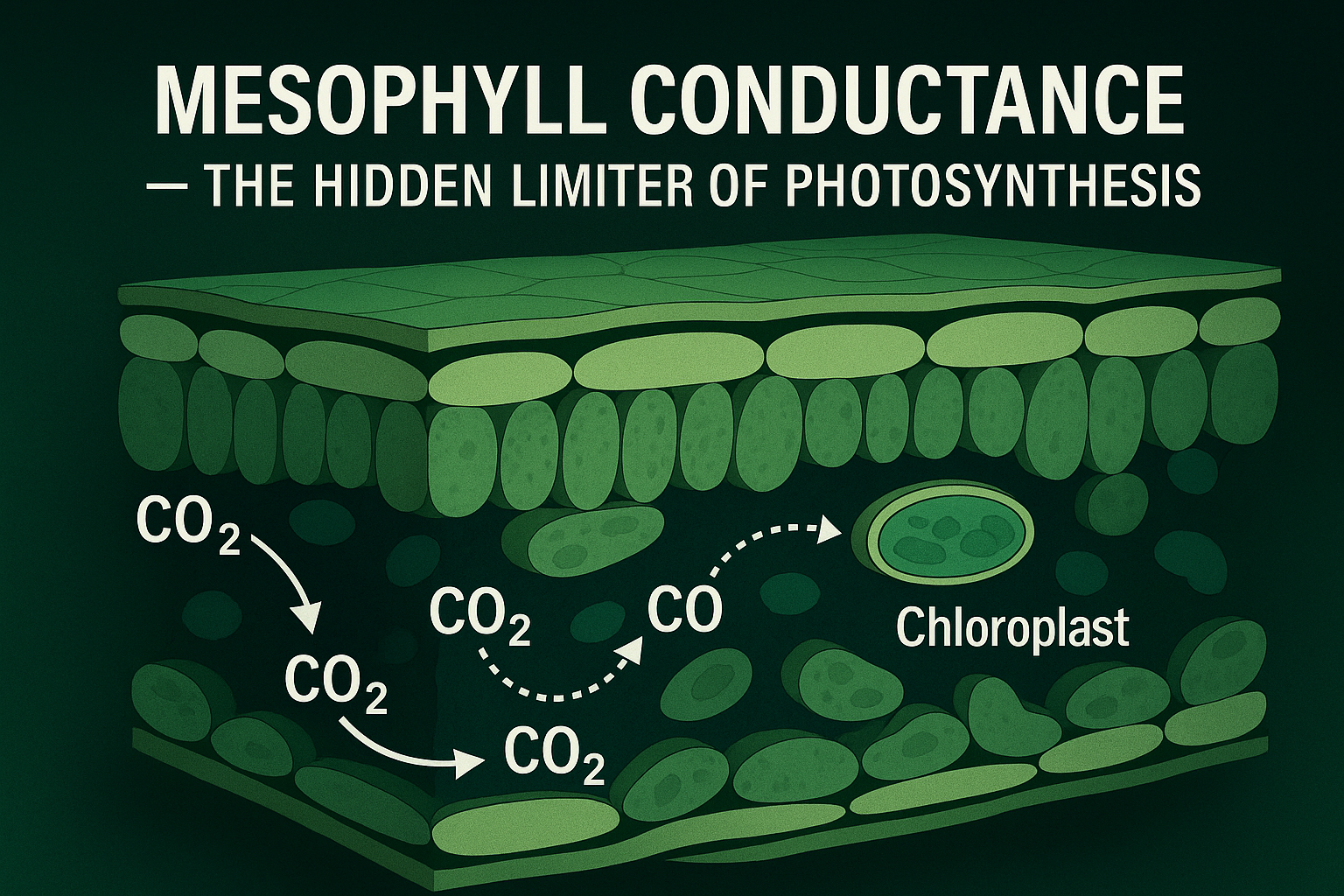
To understand mesophyll conductance more deeply, it helps to imagine the path CO₂ takes inside a leaf. After entering through stomata, CO₂ gathers in the intercellular spaces, which act almost like hallways inside the leaf. From there, the CO₂ must dissolve into a thin layer of water that coats the mesophyll cells. This dissolution slows diffusion dramatically because CO₂ moves much more slowly in water than in air.
Once dissolved, CO₂ needs to cross the mesophyll cell wall, enter the cell membrane, move through the cytoplasm, pass into the chloroplast membrane, and finally reach the enzyme Rubisco inside the stroma. Each transition represents a point of resistance, and together they create the overall mesophyll conductance.
Several structural features determine how easy or difficult this pathway is. The thickness of the cell wall is one of the most important factors. Thinner cell walls allow CO₂ to diffuse faster, while thicker cell walls slow the process down. The amount of surface area exposed to air spaces also matters. Leaves with more mesophyll surface exposed to internal air spaces such as thin, sponge-like leaves have higher conductance compared to thicker, more compact leaves.
Chloroplast positioning is another key factor. In some species, chloroplasts are arranged very close to the cell wall, minimizing the distance CO₂ must travel. In others, the chloroplasts sit deeper inside the cell, creating a longer diffusion path. These structural differences explain why mesophyll conductance varies widely between species and even among different varieties of the same crop.
It is fascinating to realize that such microscale structural variations can dramatically influence photosynthesis at the whole-plant and even ecosystem level. These hidden internal leaf traits often determine whether a plant thrives, struggles, or responds effectively to environmental change.
Environmental Stress: A Major Influence on Mesophyll Conductance
One of the most important aspects of mesophyll conductance is that it is not fixed. Environmental conditions strongly influence how easily CO₂ moves inside the leaf, and stress can dramatically reduce conductance. Drought, heat, salinity, and nutrient limitations can all alter leaf structure and physiology in ways that restrict CO₂ diffusion.
Drought is particularly impactful. As water becomes limited, cell walls may thicken, mesophyll cells shrink, and chloroplasts may reposition deeper inside the cell. These changes increase the internal resistance to CO₂ movement. Interestingly, even if stomata remain partially open during mild drought, mesophyll conductance may still drop significantly, limiting photosynthesis more than stomatal closure itself.
Heat stress also affects mesophyll conductance. High temperatures can alter membrane fluidity, disturb chloroplast arrangement, and change the hydration of internal tissues. These subtle shifts can slow the diffusion of CO₂ even before visible damage occurs in the leaf.
Nutrient stress, especially nitrogen deficiency, can also reduce mesophyll conductance. Nitrogen influences leaf anatomy, cell wall composition, and chloroplast development. When nitrogen is limited, leaves may develop thicker walls or fewer chloroplasts near the cell surface, increasing resistance.
These stress impacts help explain why photosynthesis often declines more severely than expected during unfavorable conditions. The hidden internal barriers become stronger, and even if stomata respond appropriately, CO₂ cannot reach the chloroplasts fast enough.
Can Mesophyll Conductance Be Improved?
Because mesophyll conductance plays such a major role in photosynthesis, scientists are increasingly exploring ways to enhance it. Improving mesophyll conductance could boost photosynthetic efficiency and, in turn, crop yields. Several strategies are under investigation.
One promising approach is breeding or engineering plants with thinner mesophyll cell walls. Species or varieties with naturally thinner walls tend to have higher internal CO₂ conductance. Similarly, modifying wall composition, such as reducing lignin or cellulose cross-linking, may help CO₂ diffuse faster.
Another strategy involves manipulating chloroplast positioning. Some studies have shown that moving chloroplasts closer to the cell wall increases conductance. Certain plants already reposition their chloroplasts under different light conditions, suggesting that this trait could be optimized to enhance CO₂ diffusion.
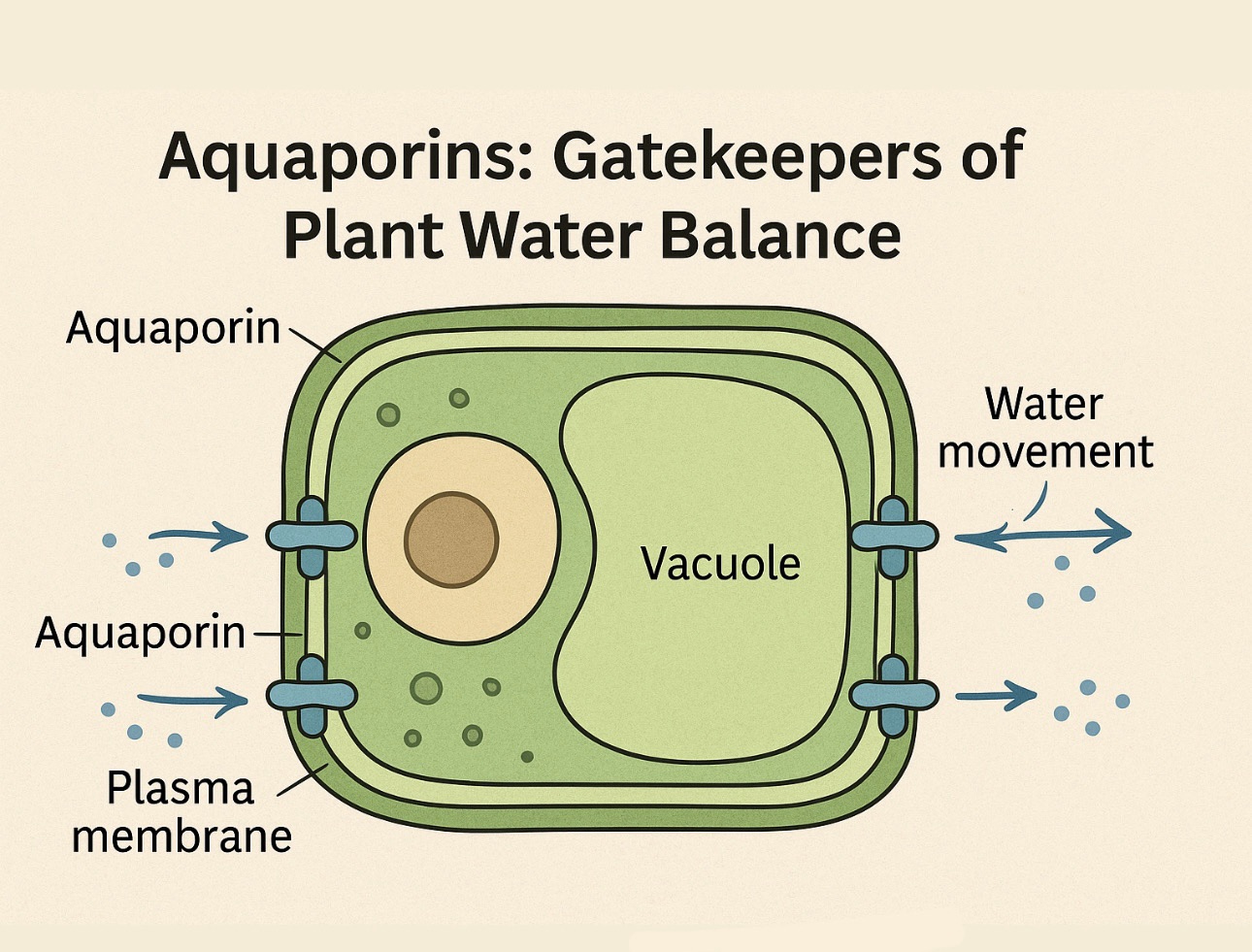
Aquaporins, proteins known for transporting water, are also being studied. Some aquaporins can facilitate CO₂ movement across membranes. By increasing the expression of these CO₂-permeable aquaporins, researchers hope to reduce membrane resistance and speed up diffusion inside the leaf.
Leaf anatomy is a complex trait influenced by genetics, environment, and developmental cues, so improving mesophyll conductance will require multi-dimensional approaches. But the potential is enormous. Enhancing internal CO₂ movement could work synergistically with other improvements in photosynthesis, creating plants that use resources more efficiently and respond better to stress.
Conclusion
Mesophyll conductance may be an invisible player in photosynthesis, but it is one of the most powerful determinants of how efficiently plants convert sunlight into biomass. It influences carbon uptake, water use, stress responses, and overall plant productivity. For decades, it remained overlooked simply because it is hidden inside the leaf. But as modern research reveals its importance, mesophyll conductance has emerged as a central topic in the quest to improve photosynthesis and build climate-ready crops.
Understanding and enhancing this hidden pathway gives us a deeper appreciation of how plants function and opens doors to innovations in plant science. The future of agriculture may depend not only on the genes we edit or the fertilizers we apply but also on the microscopic, internal architecture of leaves and how it shapes the journey of a single CO₂ molecule.
Plants have evolved extraordinary strategies to control CO₂ diffusion. Now, with advancing knowledge, we can work alongside nature to create crops that are more productive, resilient, and adapted to the challenges of a changing world.