Plant science is undergoing a transformation. For decades, understanding plant physiology meant working leaf by leaf, pot by pot, in carefully controlled greenhouse or laboratory conditions. Measuring photosynthesis, stomatal behavior, pigmentation, or water status required destructive sampling or slow instruments that could only examine a handful of plants at a time. While these methods shaped our foundational knowledge, they made it nearly impossible to study plant physiology at the scale of actual fields, farms, or breeding plots.
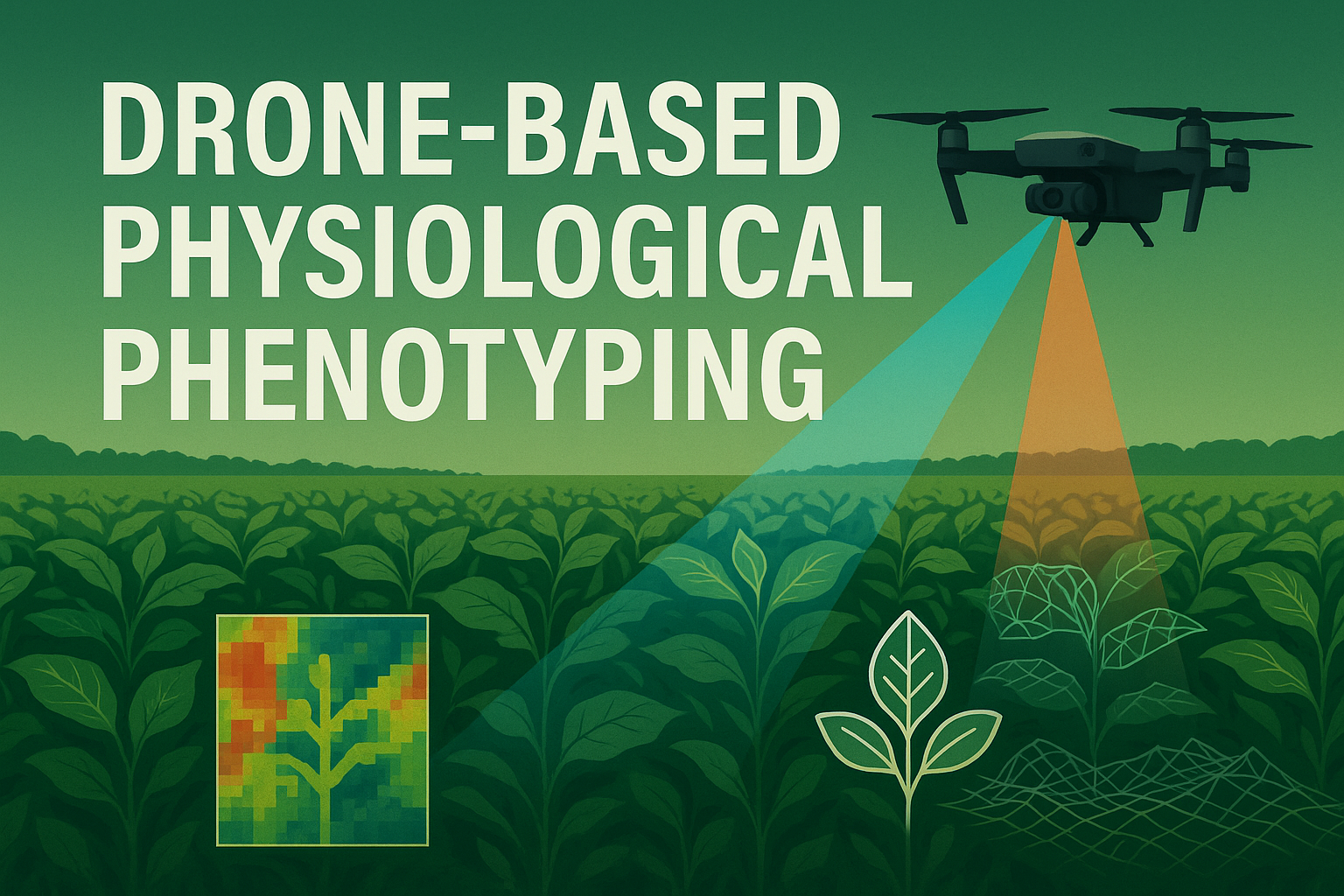
Today, drone-based physiological phenotyping has changed everything. With the rise of lightweight sensors, high-precision cameras, and advanced analytics, drones can now scan thousands of plants in minutes detecting physiological traits that once required laborious manual measurement. This technology bridges the gap between plant physiology and real-world agriculture, allowing researchers to observe stress, growth, and productivity at scales that matter for food security.
Drone-based phenotyping is not just about flying cameras. It is a powerful integration of spectral imaging, thermal sensing, remote physiology, and machine learning. From detecting drought stress before leaves wilt, to mapping photosynthetic efficiency across entire fields, drones have opened a new window into plant function. More importantly, they are reshaping how we breed climate-resilient crops, monitor stress in real time, and understand plant behavior under natural environmental fluctuations.
How Drone-Based Phenotyping Works?
Traditional phenotyping struggled with scale, speed, and precision. But drones overcome these limitations by collecting data from above while plants grow naturally. At the heart of drone-based phenotyping are the sensors mounted on the drone. Each sensor captures unique physiological information such as RGB sensors detect visible colour changes early chlorosis, senescence, or pigment shifts that hint at nutrient stress or light imbalance. Multispectral sensors capture reflectance at specific wavelengths like near-infrared or red-edge, enabling calculations of indices such as NDVI, NDRE, and SAVI, which reveal photosynthetic activity, nitrogen status, canopy structure, and leaf area.
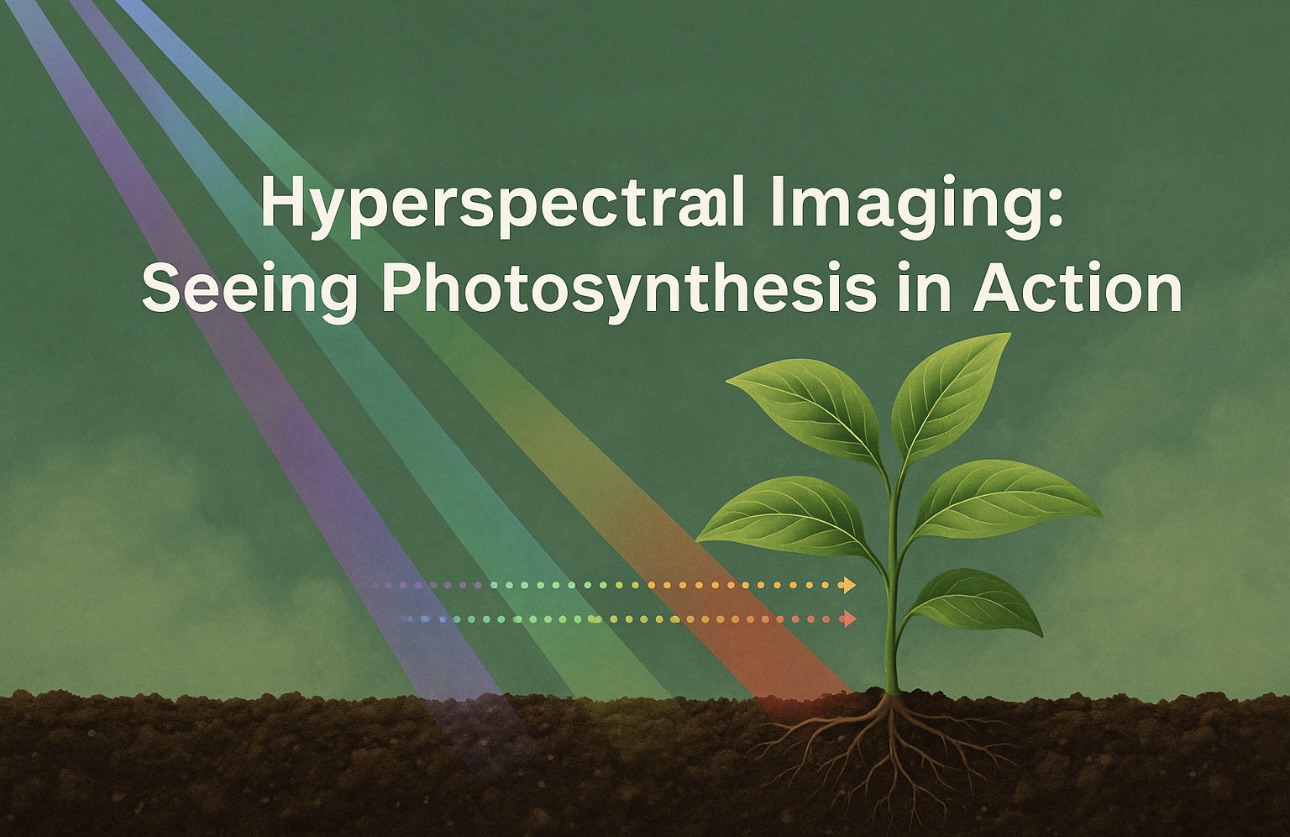
Hyperspectral sensors, though heavier and more expensive, provide detailed spectral fingerprints that show biochemical changes, pigment ratios, water content, and stress signals invisible to the naked eye. Thermal cameras detect leaf temperature differences associated with stomatal conductance, transpiration, and heat stress. A warming canopy often indicates closed stomata or water limitation. LiDAR systems create detailed 3D maps of canopy height, architecture, and biomass distribution critical traits for studying growth, light interception, and carbon allocation. When these sensors fly repeatedly over the same plot throughout the growing season, they generate a continuous physiological timeline of plant behavior from emergence to maturity. These repeated measurements are especially important because plant physiology does not remain static; it changes with weather, soil conditions, stress waves, and developmental stage. Drones allow scientists to capture these dynamic shifts with high temporal and spatial resolution.
Mapping Stress Before Symptoms Appears
One of the biggest breakthroughs enabled by drone-based phenotyping is early stress detection. Physiological stress often starts long before visual symptoms appear. Before leaves wilt, their temperature increases. Before chlorophyll breaks down, changes occur in green pigments and reflectance. Before growth slows, plants adjust water use and photosynthetic efficiency.
Drones can detect these early signals with remarkable sensitivity. For example, thermal imaging reveals subtle increases in canopy temperature, often linked to stomatal closure under drought or heat. Multispectral sensors detect reductions in red-edge reflectance associated with declining nitrogen or chlorophyll content. Hyperspectral drones can identify biochemical shifts in flavonoids, anthocyanins, carotenoids, and water absorption bands far before changes are visible.
This ability is especially vital for complex stress interactions. Drought and heat often occur together, and their early signals can overlap. Traditional measurements might miss these interactions entirely, but drones can track multiple physiological markers simultaneously temperature, reflectance, pigment indices, and canopy structure to distinguish between stresses.
Early stress detection is not only scientifically valuable; it has real agricultural impact. Farmers can intervene sooner, adjust irrigation schedules, apply nutrients more efficiently, or target pest/disease hotspots before they spread. For breeders, these early indicators offer powerful selection traits, helping identify genotypes that maintain photosynthesis or water balance under harsh conditions.
High-Throughput Phenotyping at Field Scale
Plant breeding has always struggled with a “phenotyping bottleneck.” While genotyping technologies advanced rapidly, measuring physiological traits remained slow and labour-intensive. Drone-based phenotyping breaks this bottleneck by allowing breeders to screen thousands of plants quickly.
Important physiological traits like canopy temperature, chlorophyll content, growth rate, water-use efficiency, biomass accumulation, and photochemical indices can be measured across entire breeding plots with unprecedented accuracy. Instead of selecting plants based on appearance at maturity, breeders can now observe performance throughout the entire growth cycle.
This is crucial for climate-resilient breeding. Drought tolerance is not a single trait it involves early stomatal regulation, deep rooting, osmotic adjustment, photosynthetic stability, and more. Heat tolerance demands strong photoprotection, cooling efficiency, and protein stability. Each of these processes leaves a spectral or thermal signature detectable by drones.
Machine learning models have become essential tools, analysing vast datasets to find patterns linking spectral information with physiological traits. These models can predict plant performance, classify stress types, identify genotype strengths, and guide breeders toward superior combinations of traits. This integration of physiology, remote sensing, and AI has transformed field phenotyping from a bottleneck into a high-throughput engine for crop improvement.
From Research to Real Farms
The impact of drone-based physiological phenotyping extends far beyond research. It is now shaping real-world farming practices. Drones help monitor irrigation efficiency by pinpointing water-stressed zones. They assist in precision nutrient management using spectral indices that detect nitrogen deficiency. They guide canopy management by mapping growth uniformity, biomass distribution, and structural anomalies.
As climate instability increases, the need for precise, real-time physiological monitoring grows. Droughts might emerge suddenly; heatwaves can damage crops within hours. Drone-based monitoring offers farmers an early warning system, identifying risks before significant yield loss occurs.
In large-scale agriculture, drones complement satellite systems by providing high-resolution, plot-level detail that satellites cannot achieve. Satellites detect regional patterns; drones zoom into fine physiological nuances. Together, they form a powerful multi-scale physiology observation network.
Future systems may integrate drones with ground sensors, irrigation controllers, and AI-driven decision tools creating smart farms where plants themselves signal exactly what they need, and technology responds instantly.
Conclusion
Drone-based physiological phenotyping marks a major leap forward in how we study and manage plants. It allows us to see physiology not just morphology at a scale that matches real agricultural systems. From early drought detection to continuous monitoring of photosynthetic health, drones provide insights that no traditional tool could offer. They bridge the gap between laboratory physiology and the real world, giving us the ability to study entire fields with the same precision previously reserved for individual leaves.
As climate change intensifies stress on crops, drone-based tools will become essential for early detection, breeding resilience, and guiding smart agriculture. Plants may not speak, but through spectral signatures, thermal patterns, and dynamic physiological markers, drones allow us to finally hear their signals.